Technique Tuesday: Gelatin Prints

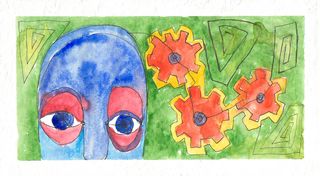
I spent Saturday making gelatin monoprints with my friend Jane. I’ve read a lot about  gelatin printing when I took a class in monoprinting in college. It’s a really simple and easy to use technique that lends itself to a variety of looks. Jane took a class with Tamar Etigen at LynnArts a few weeks ago. I found this blog about mixed media by Linda Germaine. Lots of good info on there.

First you need to make your printing plate. You need to make a big tub of unflavored knox gelatin, even sturdier than jigglers. You can buy bulk gelatin online but if you are only going to test this out, buy 3 boxes of Knox brand and mix it with 5 cups of water. This is the most expensive part of this technique. Follow the instructions on the package mixing. Pour it into a tray. we used those heavy paper disposable trays made for heating things up in a toaster oven.

Scrape the bubbles off of the top and let it harden.

We used acrylic paint and waterbased block printing ink. To use acrylic paint as ink you need to mix it with a product called retarder. You can buy Golden’s retarder for acrylic paint or speedball’s for block printing inks, both work. I liked the thickness of the speedball retarder. It allowed me to get heavy thick layers of ink on the block. The thin retarder from golden allowed me to get thin even layers.

You’ll also need a brayer. If you’ve never done any printmaking before you may want to buddy up and test this out with a friend, brayers are expensive and if you aren’t going to use them later for more printing, a pricy investment.* I preferred the soft rubber over the hard rubber.

Mix your paint and retarder well. I used about 1 part retarder to 3 parts paint. Different brands of paint used different amounts of retarder. But the 1:3 ratio seemed to work well. You can also add some gel medium to the paint to get very transparent colors.

Roll it onto the gelatin.

Here’s where things get interesting. What can you do with a solid sheet of ink? Well you can add masks and stencils to block out areas or lay down leaves from your nature walks. OR you can remove ink with q-tips, paper, old credit cards (careful not to cut the gelatin), papertowels, sponges, rags and well, just about anything. The possibilities are really endless.

Then lay a sheet of paper on it. Smooth absorbent paper works best, cardstock does wonderfully. Press down firmly. Peel it off.

Impressive isn’t it?

Spend a few hours playing with the technique. Don’t TRY to make anything. Just lay ink down, move it around, lift it up, put down multiple colors and finally print it. Don’t strive to make anything, just experiment. Make notes in your journal. What colors do you like? What colors lay over one another the best? What tool do you like?

This is one of those techniques that you can use to break up a creative rut, make background papers for collage or for you to allow happy accidents to occur. When you get an ink build up on the gelatin you can wash the ink off with tepid water and a sponge.

Ink mix0091
Ink mix0091
Ink mix0091
After you've made a few hours worth of prints you can wash the surface and toss it in the fridge for another day's printmaking. Or you can package it up and freeze it to use again. You can always melt it down in a double boiler and reform the plates. Don't ever put gelatin down your drains, it'll clog them.


Continue reading

Cult of Stuff part 2

The initial anti-cult of stuff response is, of course, that you need less, but the more reasoned response is that you need to find the media that is most suited to you in your expression.

For years I used a fountain pen. I set it aside for a set of Sakura pens and then for a set of Pitt pens until 10 years later I’m back at the fountain pen. Why? It works for me. I like how it works; I love the lines I can get.

I also use acrylic paint, watercolors, as well as various other tools. Why? They work for me and I like the effects I can get.

It took me awhile to figure out what I liked and how I work. Even still a break from my usual pen and ink work to make gelatin prints to liven things up. A workshop or a class at Michael’s, AC Moore, or your local community college can really shake things up and get you out of your creative rut. What about finding an art buddy? Someone you can head to a coffee shop with, or walk the park with, or sketchcrawl that pretty town you’ve never bothered with?

It’s a lot easier to head to the craft store and buy some premade ephemera and slap it in your journal than it is to trek to a coffee shop you’ve never been to isn’t it?

I’ve been there.

My point is that we need to get back to the process part of art journaling. Step away from the scrapping aisle. Head to the “fine art aisle.” Look at all the stuff there. Student Grade. Artist Grade and the more recently introduced “Professional” grade*. Here’s the thing, none of the stuff in that aisle is going to make much sense until you get dirty with it. Sure you understand pencils, colored pencils and pens but what about those tubes of paint? Where do you even start? Head to YouTube, Google, or ArtJournaling.ning.com search through for some technique videos and tutorials. The internet is crawling with great (and shitty) advice.

  • Try to avoid buying supplies on a whim**.
  • Buy student grade if you aren’t sure you’ll like this media***.
  • Don’t start with a full contingent of mediums and additives.

Make a promise to yourself that you will sit down with that one material and experiment with them in every way you think possible and a few ways you didn’t think were possible. Make notes. Get to know that material.

Get curious. Perform mad science in the pages of your art journal.

Ask yourself this question: What would happen if I did this? How would this respond to this?

Now that you know that material inside and out, add to it. Layer your spray inks over watercolor, and acrylic over that, glue down some ephemera from that coffee shop you tested out last weekend.

Now that you’ve read all this, you’re thinking, “I don’t have time, I just want results.” Here’s my answer to that, “You need to make time to experiment. You can’t get results without putting in a lot of time. If you take short cuts the only thing you’re doing is cheating yourself.”

When you decide a media isn't for you get rid of it. Craigslist and eBay are wonderful tools for getting rid of stuff you don't want anymore. Also consider donating unused art supplies to a school for use in their art room.

If you are new here, this is your first visit, please realize this is a (so far) 4 post rant on stuff. Feel free to head here to read the rest of my tirade. Also, please don't assume that I hate pretty pages or would sneer at your art. This rant is about empowerment not judgement.

Continue reading

I noticed

I was looking at my stats and I noticed that someone was looking for the admin of this site. that would be me. If you need to contact me my email address is on my about page. Click the link that says "About" on the top left side of the page, right above the painting of me.

Cult of Stuff part 1

Stuff. I need more stuff.

AC Moore just sent out a 40% off coupon. So did Michael’s, and Hobby Lobby, and Blick sent me a 20% off and Utrect sent me a free shipping on orders over $25, and Cheap Joe’s sent me a 10% off all orders over $50, and Jerry’s Art-a-rama is having a sale on…..

Sometimes the sheer amount of art and craft materials available is overwhelming.

When I used to walk into an art or craft store about 20 years ago I made a beeline for “my aisle” of art goods, you know the sketchbooks, paint, drawing tools and that stuff. Now that stuff is in the far corner of the store like eggs and milk and I’m forced to walk past the giant sale displays of stuff.

Aisles and Aisles and Aisles of shiny toys.

Rubberstamps.
Tapes.
Eyelets.
Inks.
Sprays.
Stencils.
A hundred different types of glue.
Pre-mixed glazes.
Additives for watercolors, acrylics and oils.

It’s so easy to pick up a rubber stamp that fit my needs. So much easier than carving a wine cork or an eraser. Or what about some of that premade ephemera? It’s ACID FREE and ARCHIVAL! Why cut my own stencil when I can buy one? Look at all the rolls of shiny tape! I could make my own with plain white or colored but it’s so much easier to just buy a roll.

This is how we end up with totes and drawers full of stuff we don’t really use, stuff we bought on a whim like those really cool looking sandals that ended up being fabulous to look at but were hell on the toes.

Art journalers tend to be collectors of stuff, as is we’re documenting our lives in tiny little notebooks* and collecting our thoughts, why not collect the stuff to make it easier?

But where does it end? Soon enough you aren’t documenting YOU but your stuff. How much of you is in that journal that is layered with Time Holtz masks, Tim Holtz papers, and Tim Holtz tapes that don’t stick, and inkadinkadoos rubberstamps, that you made by following someone’s instructions in Art Journaling Magazine. I know what the next thing you are going to think/say/write and it’s, “But, Less, I didn’t go to school for art. I can’t draw. I can’t paint. I can’t make my own tape. I can’t…..” My response is, “Have you tried? Have you sat down with the materials and tried?”

Because THAT, the trying things out is what an art journal is at least partially about. Sitting down with your pencil, paint, and stamps and figuring out you. It’s meditative practice. It’s getting in there, getting your hands messy and figuring YOU out. It’s getting the mess out of your head and into the journal.

You know what it’s absolutely NOT about? Making a pretty designed page. If you want to make a pretty designed page start a scrapbook.**

Yeah I said it. Scrapbooking is about design and making pretty things. Art journaling is about exploring your inner and outer world, it’s not always going to be pretty, hell, some days it’s going to be downright ugly, while on other days it will be beautiful.

My point is, I, and you, don’t need all that stuff to make our art journals. Put down the Tim Holtz tissue tape-ology*** gun (remember it doesn’t stick anyway) and pick up the flier from your favorite coffee shop and some elmer’s glue, your journal and an ink pen and tell me all about it.

If you are new here, this is your first visit, please realize this is a (so far) 4 post rant on stuff. Feel free to head here to read the rest of my tirade. Also, please don't assume that I hate pretty pages or would sneer at your art. This rant is about empowerment not judgement.

Continue reading

Art Journaling Essentials: Books for Beginers

One of the questions I get asked pretty often is what books I would recommend to someone just starting out in art journaling. There are 3 books I think are essential to anyone just starting out in Art Journaling.

First is Keri Smith’s How to be an Explorer of the World. I reviewed this for the zine and I’ll republish the article here at some point. But this book is all about looking at the world around you. It’s inspiring. It’s full of proposed action. Get it.

The second is Dan Price’s How to Make a Journal of Your Life. I haven’t reviewed this but will. It’s about opening up your perception of the world and learning how to look and to be in the moment.

The third is Danny Gregory’s Every Day Matters. I also should review this book. It’s about learning that life, every moment of it, matters and that we should take time to fully savor and enjoy it.

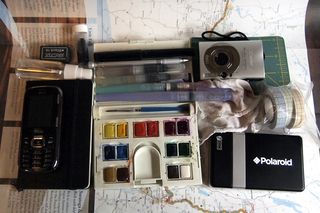
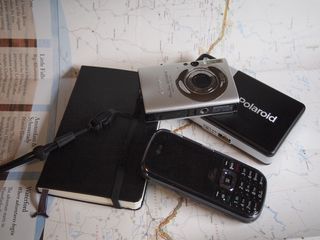
What you’ll notice about all three of these books is that not one of them is about technique. They are about enjoying your life, opening up your mind and looking at life and enjoying every day. None of the books recommend expensive materials; in fact Kerri Smith’s book is made to be used as a journal. Dan Price suggests you start out in a cheap pocket sized spiral notebook and Danny Gregory suggests a cheap watercolor set, black ink pen and a moleskine.

As I see more and more of the “cult of stuff” filtering into my precious art journal scene I am more and more drawn to “old school” art journaling- a black ink pen, a set of travel watercolors and a simple sketchbook. These 3 books are just that good old fashioned basic books on art journal, full of inspirational text that will get your art journal mojo going.


You can also buy Dan Price's book directly from him via his website.

Continue reading

Art Journaling Essentials

I'm starting a series of posts for the next few Saturdays called "Art Journal Essentials." Each post will have a series of themed items I think are necessary for art journaling. I'm starting this tomorrow (saturday) and will run it until I'm done.

Review: Golden Coarse Pumice Gel

Golden Coarse Pumice Gel

I purchased a 6 pack of Golden Mediums about a year ago and other than using the gloss gels I haven’t used them. The list price for 8 ounces is $13.49 and it comes in a tub. In the tub it is gray in color and looks much like cement.

I used an old discount card to spread it on my binder’s board. It lays down a very thick and heavy layer. I found it pretty difficult to lay it down thin. As I was laying it down on the board I had moments where I didn’t think it would stick. It’s a very dry gritty material. It does stick. It helps to work slowly. Because it is so gritty I would recommend using an old brush or a metal palette knife to spread it.

IMG_3011
When dry it still retains that cement like look which could make a very cool texture in a journal. It retains its flexibility so it could be used on a journal page with no issue. It can be used as a base much like gesso but keep in mind it’s very gritty and its surface is much like 60 grit sandpaper. It’s very rough. When coloring my pages it wore holes in the rags I was using to apply glaze and color.

IMG_3007

(On the left is the Golden and the Right Liquitex.)

This is a very intense texture gel that can definitely make a statement when used on canvas or page. It took a full ounce to cover an 8.5×11 inch page completely. The deep crevasses and graininess of it is very neat. With color added it’s even more interesting.

Ink mix0088

 A quick comparison of the Golden Coarse and the Liquitex shows that the golden is muchmore coarse, the liquitex is more like 100 grit sandpaper where the golden is like 60 grit. The difference is noticable and visible.

Wordy Wednesday: I Need Another Day

I'm having one of those mornings where I think I shoudl have a whole lot more to say about stuff but I don't. Yesterday was hot and humid and I spent the day at the Peabody Essex Museum with Christie looking at art and crafts from around the world. We ate good food at one of our favorite places. I bought boots with arch support so that when I go walking my feet won't feel like someone smashed them with a hammer also so that if I go into some lesser explored places and step on glass it won't slice through the sole of my shoes.

I planted a white currant bush my father gave me. It looks good. My yard is a field of dandelions. To make my neighbors happy I'm going to spray but I'mnot happy about it. I wisht he grubs would eat dandelions instead of the grass but they only seem to like the grass that grows in the yard. Go figure. Everyone else around here chemlawns and thus our yard is a haven for bugs. If everyone quit chemlawning it would help. Or at least cut back on how often they chemlawn…

Have I mentioned I'm not quite ready to go back to work after my four day weekend? Yeah.